
 Back to Telecommunications
The roll out of full fibre across the UK is a British infrastructure success story. Four years ago, less than a quarter of UK homes and offices had access, and it now stands at around eight in 10.
The new networks provide faster speeds and fewer faults. They also help to grow our economy, close the digital divide and support the modernisation of our public services. The more that technologies like artificial intelligence emerge, and are applied, the more important this absolute backbone of the UK’s digital infrastructure is going to be.
In 2016, the UK found itself towards the very bottom of international league tables with respect to full fibre availability. This led Ofcom to announce a strategic shift towards large scale investment in fibre infrastructure, recognising that the incumbent, Openreach (the network arm of BT) had been slow to invest, and that there were limited competitive threats to its position.
Come March 2021, Ofcom introduced a new, 10-year regulatory framework to supercharge the rollout, overhauling its approach towards regulation: the Wholesale Fixed Telecoms Market Review 2021-26. Ofcom’s approach drove competition in fixed networks and created incentives for large-scale investment from new players as well as existing players.
Ofcom opened up access to Openreach’s duct and telegraph poles to make it cheaper and easier for new entrants to build their own networks.
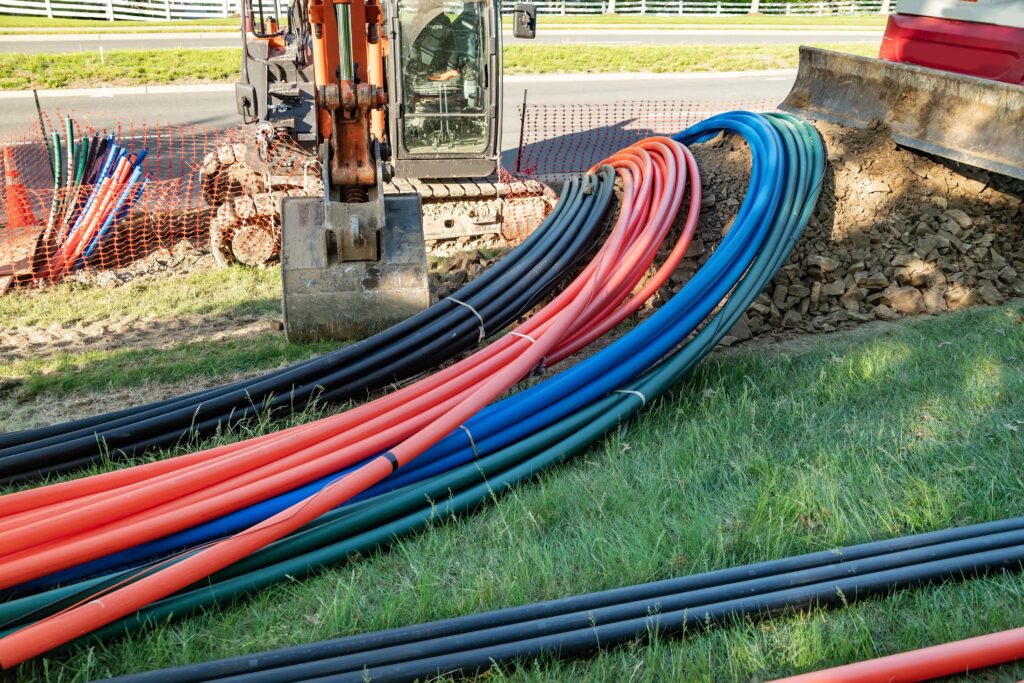
While competition develops, Ofcom maintained regulated access to Openreach’s network, but departed from traditional cost-based regulation used in the past. Ofcom also set out its intention to provide regulatory stability for a longer than usual period (10 years vs. five) if positive outcomes were seen to be delivered.
Success is clear. From a standing start, the UK has achieved one of the fastest deployments of FTTP in Europe, with industry investment ranging between £3bn and £6bn each year. This has been not only from Openreach, but also the cable operator Virgin Media O2, and a host of alternative network providers (altnets).
Since 2021, coverage of full-fibre networks has more than tripled to 78% of residential premises, with build across both urban and rural areas. According to telecoms industry data, coverage could reach 95% within the next two years if providers’ plans are realised.
Ofcom has also managed to stimulate competition – 75% of premises now have at least one alternative to Openreach’s full fibre or legacy networks, and 29% have two alternatives – customers have more choice than ever before.
But more investment is needed to extend coverage even further and to support the development of competition for the long term. In March 2026, Ofcom will finalise the second half of its ten-year framework, setting out regulation for the five-year period from 2026-2031 (The Telecoms Access Review 2026-31). Ofcom’s underlying objectives of promoting investment and competition remain unchanged and its March 2025 consultation proposed to keep much of their approach in place, ensuring stability and certainty for investors.